





- Producer Feature - 002
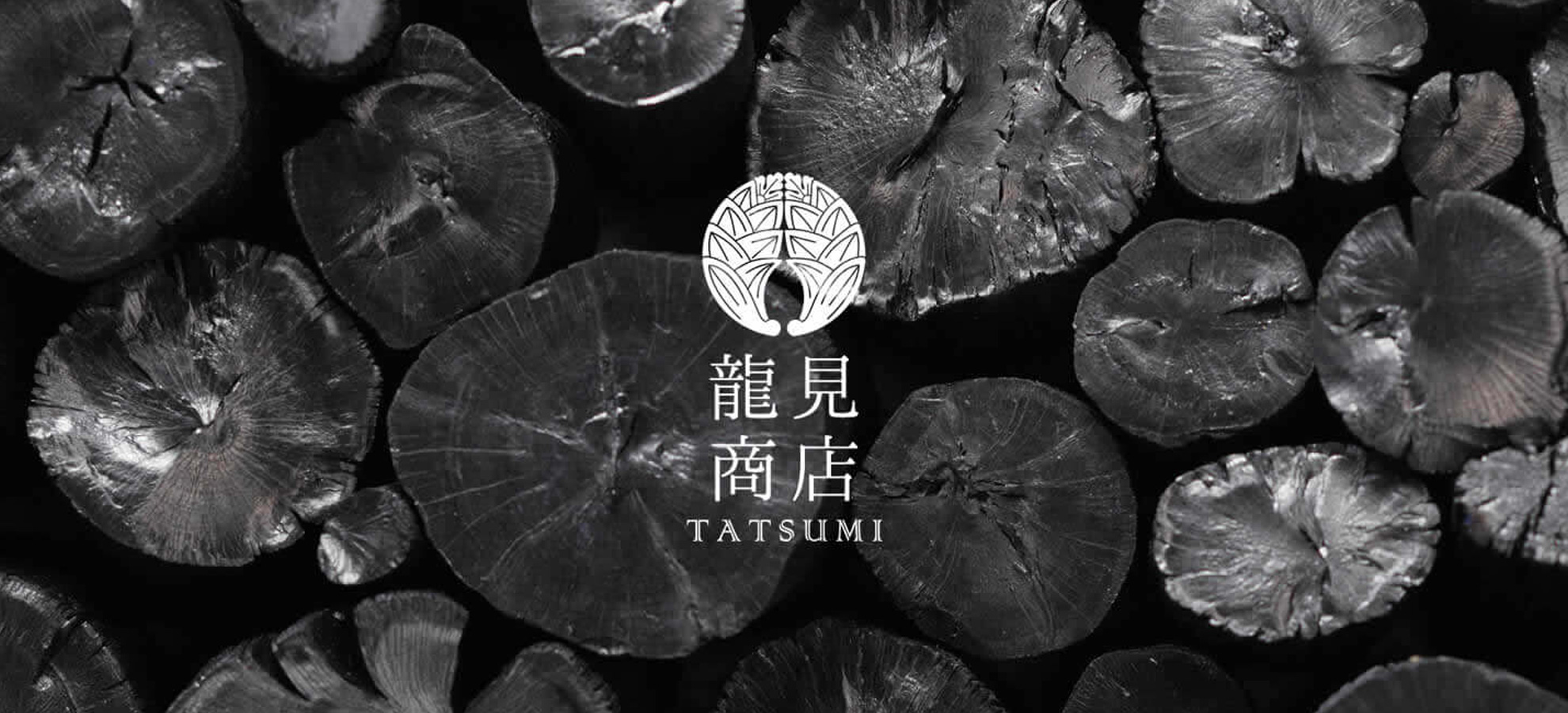
- Ryumi Shoten Co., Ltd.
~A Life with Charcoal~
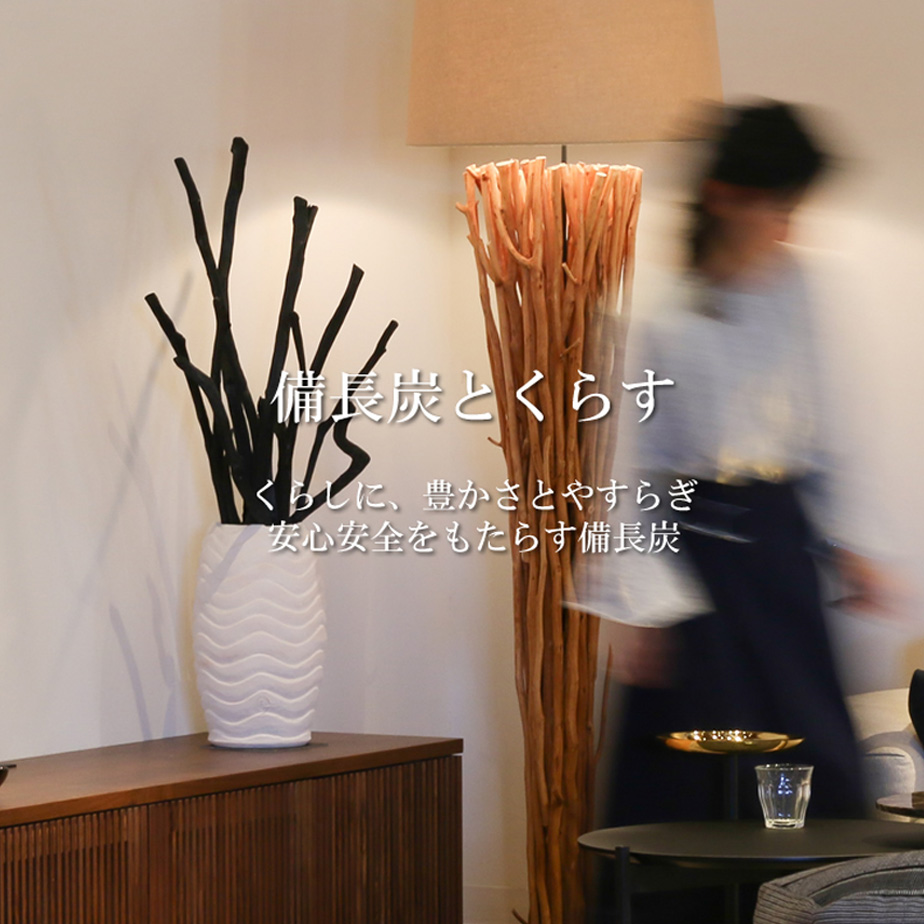
Living with Bincho-tan: Bincho-tan brings richness, tranquility, and peace of mind to your life.
Ryumi Shoten Co., Ltd. is located in Tanabe City, Wakayama Prefecture, the home of Kishu Bincho-tan charcoal, a World Heritage city.
Tanabe City is a charming and warm-hearted town with many attractions, including seafood, mountain specialties, the Kumano Pilgrimage Route, and hot springs.
We handle Kishu Bincho-tan charcoal in this location, which is surrounded by nature.
We are fascinated by binchotan charcoal and are developing products that make the most of the power that high-quality charcoal possesses.
~My Encounter with Kishu Bincho-tan Charcoal~
~Meeting Kishu Binchotan Charcoal~

When I was 19, my father took me to a binchotan (a type of charcoal) kiln in Ueno, Tanabe City. The first thing that surprised me was the sweet smell that wafted around the kiln. And then I realized how much work it takes to make binchotan. The area around the kiln opening was scorching hot.
I vividly remember the "Okaisan" (rice porridge) that my mother cooked with the binchotan charcoal I bought from that kiln, which was very delicious when paired with Kinzanji miso.
I was very surprised to hear that even if you put 1,000 kg of raw chestnut wood into the kiln, the finished binchotan charcoal will only be about 100 kg, with a yield of only one-tenth.
And I completely fell for the charm of binchotan charcoal.
I built a house when I was 24 years old.
Before starting the foundation work, professionals in charcoal making were invited from Kyushu to provide guidance, and several tons of charcoal were buried.
You will come to realize that choosing the right place to bury it is very important.
When I was 50 years old, I had barrier-free renovations done for my mother.
The carpenter peeled back the wall, and the bamboo used in the "etsuri" (an ancient weaving technique using bamboo) visible from inside the earthen wall was the fresh, vibrant green color of freshly cut bamboo.

Even the carpenter was surprised.
"This is the first time in my life I've seen a place where all the bamboo used is still the original from when it was newly built!"
In the autumn of my 57th year, I visited "Etsuri" again. I was once again surprised to see that both the first and second floors had retained the same light blue bamboo color.
I was also convinced that the exterior of the house had less damage compared to other houses built around the same time.
For the past 30 years, I have lived with Kishu Bincho-tan charcoal, using it for water purification, rice cooking, bathing, in every room, in the car, for the plants in the garden, and even carrying it with me when I go out. I truly feel that it has been a great experience to have charcoal as a part of my life.
~Evolution~
~Evolution~
The origin of Kishu Bincho-tan charcoal seems to be around 1200 years ago, when Kobo Daishi was involved in the charcoal-making method.
The production of Bincho-gan charcoal began in the Edo period by Chosaiemon Binchoya in Tanabe City. The Ume-gashi tree, the raw material for Kishu Bincho-gan charcoal, is the prefectural tree of Wakayama Prefecture. It is also the symbolic tree of Tanabe City.
Around the age of 40, I met a local Bincho-gan kiln owner and specially ordered only long pieces of charcoal.
That was the starting point, and after repeatedly approaching local kilns, we were able to regularly obtain rare, long charcoal for our sculptures every month. The diameter is 3-4 cm. The longest pieces are 175 cm, the shortest are around 5 cm, and the thinnest are about the size of chopsticks, so there is a lot of variety.
Grilling meat and seafood over Kishu Bincho-tan charcoal brings out the exquisite flavor.
I hear that it's recognized by celebrities overseas.
I felt that it was a real waste to only use such wonderful Kishu Bincho-tan charcoal for charcoal-grilled dishes.
(If you burn it, it becomes ash.) This ash can also be used as glaze by pottery artists...
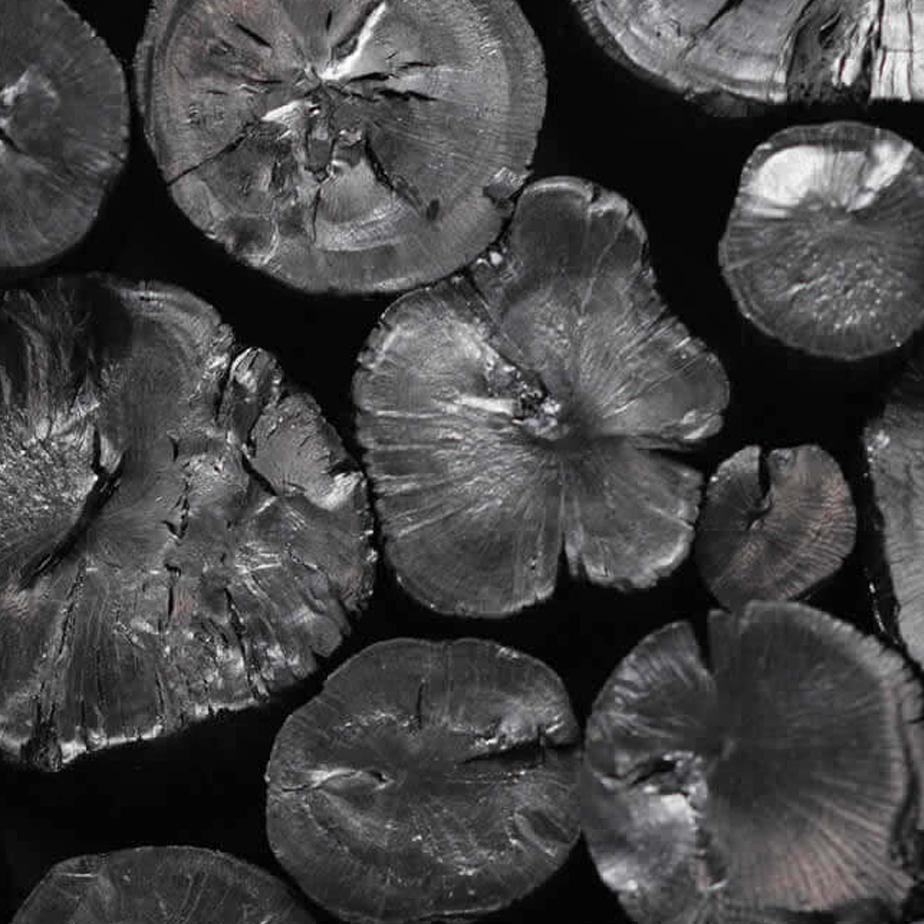
The Goodness of Kishu Bincho-tan (Kishu charcoal)
- - Charcoal-grilled BBQ cooks the ingredients to a tender and juicy finish.
- - Kishu Bincho-tan charcoal is easy to handle even for professional chefs because of its strong firepower and long-lasting burn due to the far-infrared effect, its ability to retain moisture, the lack of odor when burned, and its ability to create a crispy surface while retaining flavor.
- - If you put tap water and Kishu binchotan charcoal in an empty bottle, the tap water will become smoother and more palatable after a few hours.
- - Water purification and filtration.
- - When placed in a rice cooker, it will cook shiny, fluffy rice.
- - When added to bathwater, it softens the water, making it gentle and moisturizing for the skin.
- - Also suitable as interior decoration.
- - Air purification effect, deodorizing effect.
- - Measures against electromagnetic waves.
- - Don't throw it away; use it to fertilize your potted plants to keep them thriving until the end.
Staff Comments on the Use of Kishu Bincho-tan Charcoal
If you put tap water and binchotan charcoal in an empty bottle, the water will change into a mellow, pleasant-tasting water after a few hours. You can drink it chilled every day. Also, the taste of purified water will be even better.
When I soak in a bath with binchotan charcoal, the usual tap water feels good on my skin, and my skin becomes moisturized. It transforms into very gentle water for my skin, which has side effects from cancer treatment, and it's a blissful time.
It also has air-purifying and deodorizing effects, so I use it as an interior decoration item.
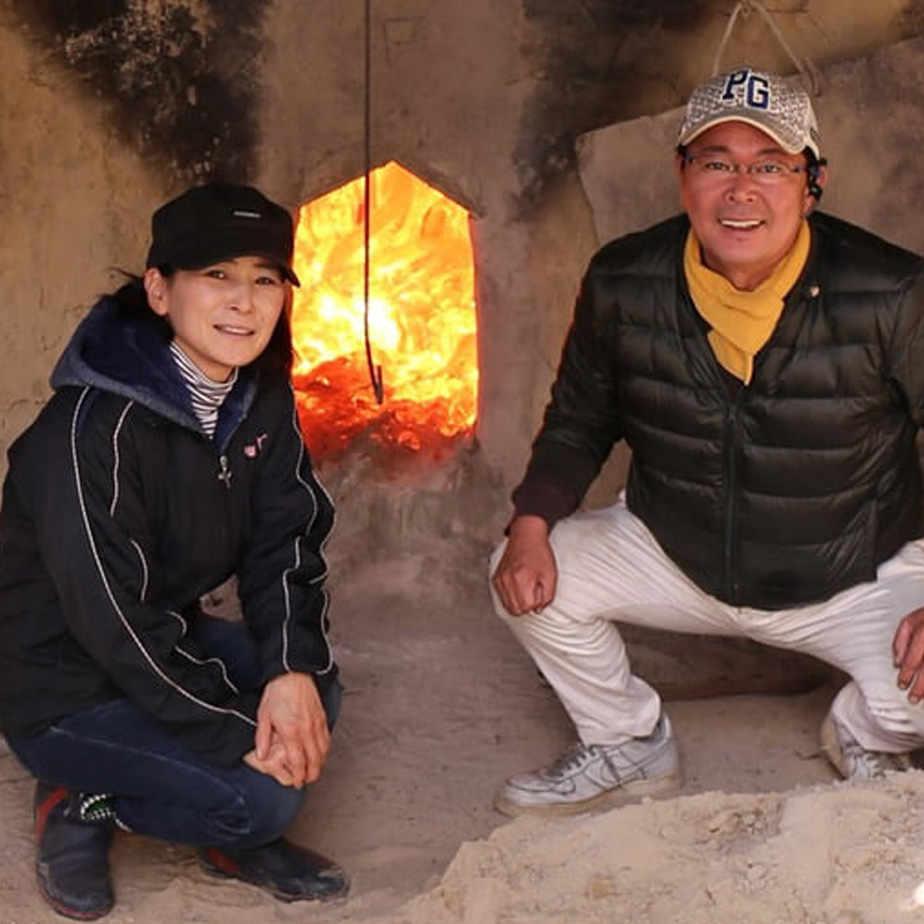
Enchanted by Kishu Bincho-tan charcoal.
As a couple, we are fascinated by Kishu Bincho-tan charcoal, and we live with it every day. We are working on product development to share good products with everyone.
Using the Ubagashi tree as a raw material, the charcoal is made by steaming and baking it at high temperatures, and then extinguishing the flames outside the kiln by applying ash called "Sōhai." This process produces high-quality charcoal with a fine texture.
The charcoal-making technique for Kishu Bincho-tan has been designated as an Intangible Folk Cultural Property of Wakayama Prefecture. During the carbonization process, countless small spaces are created, and as a physical characteristic of these spaces, a reaction occurs that adsorbs and purifies surrounding odor substances and impurities.
"Kishu Bincho-tan charcoal is highly trusted by chefs at charcoal-grilled restaurants all over Japan!" But that's not all. The future potential of Kishu Bincho-tan charcoal lies in its application to daily necessities, quasi-medicines, cosmetics, livestock and fish feed, supplements, and even medical applications in the future.
In an era that is constantly changing, there are things that continue to be updated without changing their essence, and that continue to be protected across time.
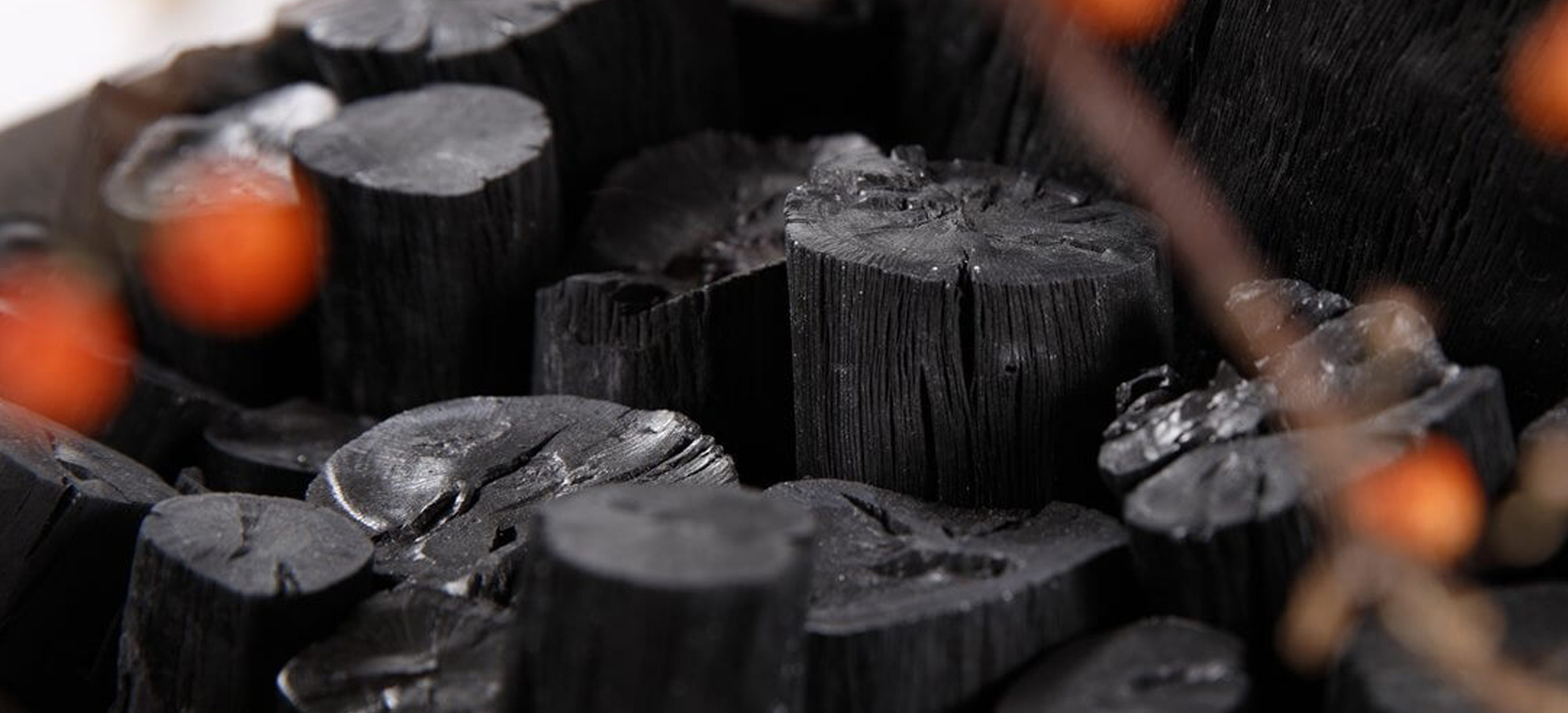
Binchotan charcoal, with its diamond-like black luster and purifying properties that break down harmful substances.
We want to bring true "beauty" and "health" to daily life by utilizing Japanese traditions and technology through binchotan charcoal.
IORILINK Interview Report
When I first met the couple, I was impressed by how approachable both the husband and wife were, and how warmly they welcomed us.
When I visited your home, which also serves as your office, you were so hospitable and I felt very warmly welcomed.
The couple, fascinated by the wonderful natural power and blessings of Kishu Bincho-tan charcoal, are dedicated to product development, striving to convey the best products to everyone by making the most of the power of high-quality Kishu Bincho-tan charcoal.
Both husband and wife have a strong passion for Kishu Bincho-tan charcoal, and they put a lot of love into it.
I highly recommend the Kishu Bincho-tan products developed by this husband-and-wife team!

 Ryumi Store
-

- YAKORA (Binchotan Hibachi)
- ¥100,100
-

- Bamboo Basket Object (EN) Medium Size
- ¥110,000
-

- High-quality binchotan charcoal for BBQ, 1.2kg
- ¥4,180
~Shinichi Ryumi & Chizuru Profile~
~Shinichi & Chizu Tatsumi Profile~
- Born in 1959 in Shimomisugi, Tanabe City, Wakayama Prefecture.
- 1975: Enrolled in Wakayama Prefectural Nanbu High School, joined the hardball baseball club with the dream of going to Koshien.
- 1979: Encounter with Kishu Bincho-tan (a type of charcoal)
- 1980: Stayed in the United States for two years for agricultural training, mainly in Arizona. Nickname at the time: Dragon.
- 1983: Cultivated Satsuma mandarins and plums using the benefits of charcoal at the family farm. Named the third generation of Takayoshi.
- 1988: Started wholesale business of pickled plums, and began selling Kishu plum vinegar, continuing to the present.
- 2004: Started creating Kishu Bincho-tan charcoal sculptures. Founded Ryumi Shoten Co., Ltd. "The Sacred Sites and Pilgrimage Routes of the Kii Mountain Range" was registered as a World Heritage Site.
- 2014: Began working on a 360° horizontally rotating binchotan (Japanese charcoal) sculpture.
- 2017
- I create flower vases using binchotan (white charcoal) powder and black charcoal powder. - As a Carbon Designer, I aim to create healing environments. - My wife, Chizu, is a decorator who incorporates charcoal into her designs.
- 2018: Developed Ryū no Izumi (registered trademark), Kishu Binchotan Mist Water, Kishu Binchotan Gel Pack, and Kishu Binchotan Essence.
- 2019: Obtained trademark registration certificate for "Ryū no IzumiⓇ" (Registration No. 6204625)
- 2021: Developing products using Koshu vinegar and the Koshu oak tree, which grows along the Kumano Kodō, in collaboration with the Koshu region.
- 2022
* Obtained trademark registration certificate for Bincho-tan charcoal stove YAKORAⓇ, Registration No. 660284864 * Obtained trademark registration certificate for flame-inspired art object 焱Ⓡ, Registration No. 6624317 * Developed name tags using Ubagashi, a type of oak tree, from Kishu Bincho-tan charcoal, Utility model registered.
~Gallery and Map~
~Gallery and Guide Map~
■ Address
646-0215 (Postal code)
146-7, Nakamisue, Tanabe City, Wakayama Prefecture
Ryumi Shoten Co., Ltd.
TEL 0739-33-0303 FAX 0739-33-0606
■ Gallery Reservation Hotline: 090-7658-5000
■ Email Address: tatsumishin@leto.eonet.ne.jp
■※Please contact us in advance before visiting our gallery.
■ For customers arriving by car
- Hankawa Expressway, Matsubara JCT to Tanabe IC: Approximately 2 hours (approximately 160 km)
- Approximately 8km from Tanabe IC via National Route 42
■Railway: JR Kisei Main Line
- Shin-Osaka to JR Kii-Tanabe: Express train, approximately 2 hours
(Approximately 20 minutes by taxi from Tanabe Station in Wakayama Prefecture)
■ Air travel / Japan Airlines (JAL)
* Haneda Airport to Nanki-Shirahama Airport: Approximately 1 hour and 10 minutes
(Approximately 25 minutes by taxi from Nanki Shirahama Airport)